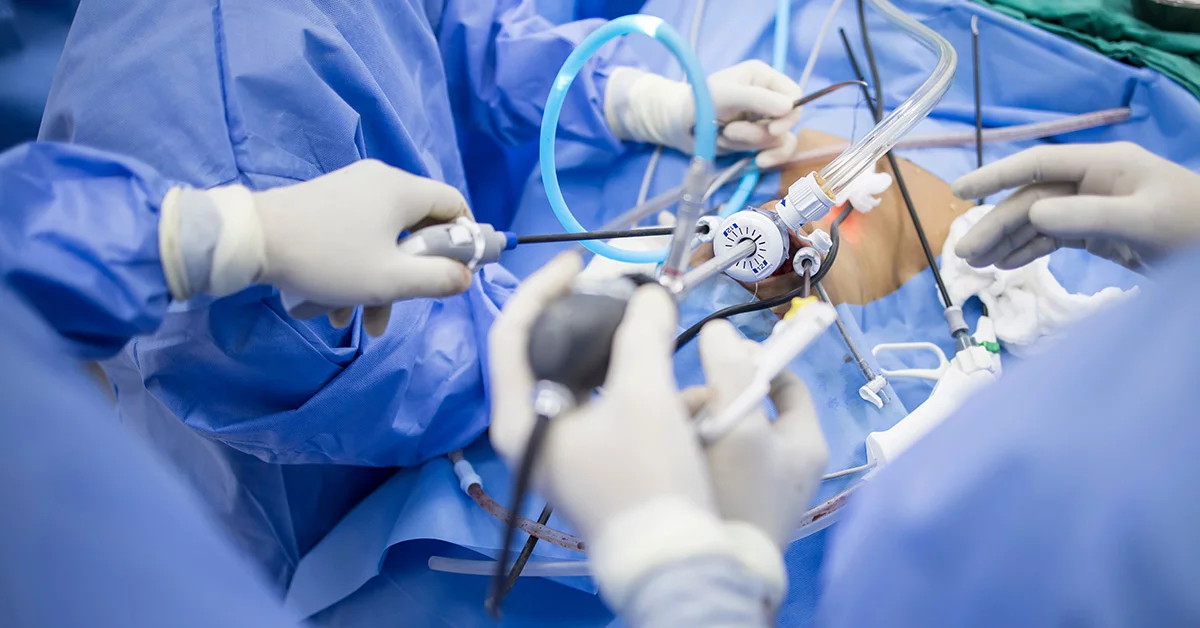
Pediatric Minimal Access Surgery: The Modern Standard of Care
Pediatric Minimal Access Surgery (MAS)—commonly known as pediatric laparoscopy, and fondly referred to as ‘Doorbeen waali surgery’ among the Indian masses—is rapidly becoming the standard of care for numerous pediatric surgical conditions. This transition has been largely driven by the rapid refinement of specialized surgical technology and pediatric anesthesia techniques over the last two decades.
A Brief History: From Pioneers to the Indian Arena
The global and domestic journey of pediatric MAS is marked by visionary pioneers who broke away from conventional open surgery:
• International Pioneers: The groundwork was laid by trailblazers such as Francis Richard Cruise (Pediatric Thoracoscopy), Georg Kelling (Pediatric Laparoscopy), Stephen L. Gans (Neonatal Laparoscopy), and Sigman et al. (Pediatric Laparoscopic Cholecystectomy).
• The Indian Evolution: Pediatric laparoscopy was introduced to India toward the end of the 20th century. At the dawn of the 21st century, the Indian Association of Pediatric Surgeons (IAPS) established a dedicated division: the Pediatric Endoscopic Surgeons of India (PESI).
The Impact of PESI: This body played a monumental role in promoting pediatric laparoscopy across the country, bringing together visionary Indian pediatric surgeons—including Dr. T. Dorairajan, Dr. K.R. Srimurthy, and Dr. Bishan Mukhopadhyay—who possessed the zeal to usher in this new era.
Overcoming Initial Challenges:
In its infancy, pediatric laparoscopy faced distinct hurdles that required unique solutions tailored to a child's physiology:
• Spatial Constraints: Operating within the significantly smaller abdominal working space of a child.
• Ergonomics: Initial lack of appropriately scaled, short-hand instruments.
• Physiological Differences: Managing the distinct anatomical and physiological responses of pediatric patients compared to adults under pneumoperitoneum.
• Training & Skill Acquisition: Masteric advanced intracorporeal suturing skills and addressing a lack of specialized training centers.
Today, advanced surgical and anesthetic technologies have largely overcome these hurdles. As the technology continues to evolve, MAS is being widely accepted by pediatric surgeons across India, progressively replacing conventional open procedures.
Distinct Advantages of Pediatric MAS
The benefits of laparoscopy in pediatric patients mirror those in adults, spanning both short-term recovery and long-term quality of life:
Short-Term Advantages:
* Minimal postoperative pain and reduced analgesic requirement
* Accelerated functional recovery
* Significantly shorter hospital stays and earlier return to normal activity
Long-Term Advantages:
* Superior cosmesis with tiny, barely visible scars
* Prevention of musculoskeletal disabilities (e.g., avoiding the rib-spreading deformities associated with traditional thoracotomy)
* Reduced incidence of long-term adhesive bowel obstructions
Common Procedures Performed via MAS Today
A wide array of pediatric conditions—ranging from routine day-care surgeries to complex reconstructive procedures—are now routinely managed laparoscopically:
• Routine & Intermediate Procedures: Inguinal herniotomy, appendectomy, cholecystectomy, and orchidopexy for intra-abdominal testes.
• Advanced Reconstructive Procedures: Pyeloplasty (for PUJ obstruction), laparoscopic pull-through procedures for anorectal malformations and Hirschsprung's disease, and hepaticoduodenostomy or Roux-en-Y hepaticojejunostomy for choledochal cysts.